Best overall islamic wall art for home in 2026: the Islamic Calligraphy Mosque Canvas Print from Opulent Style. Best for a room that needs quiet pattern: a geometric print. Best for a gift with a specific message: verified verse calligraphy. The Opulent Style canvas is the clearest starting point for a shopper who wants a black-and-white focal piece without choosing a particular verse.
- For islamic wall art, the Opulent Style calligraphy canvas wins overall as a black-and-white focal piece.
- Choose geometric art for pattern without a written message; choose verse calligraphy only after checking the exact text.
- Match the artwork to the wall, then check dimensions, finish and hanging details before ordering.
Why this matters
Islamic wall art does more than fill an empty wall. A calligraphic piece can carry language a recipient holds close; a geometric design can bring visual rhythm without asking anyone to interpret text. Those are different gifts, even when both suit the same room.
This 2026 guide ranks types of artwork, not a catalog of products claimed to be interchangeable. The named canvas has a stated design and finish. For the other styles, use the criteria below to assess the actual piece you find rather than assuming every print has the same materials, wording or construction.
What makes the best islamic wall art for home?
- Personal meaning: Decide whether the recipient wants written words, a recognizable architectural form or a pattern. Never treat a decorative Arabic inscription as a verified verse without checking it.
- Readable design: Judge the artwork from where people normally sit or stand. Fine lettering and intricate geometry can lose their impact at a distance.
- Wall fit: Measure the open wall and the furniture beneath it. Compare the artwork's listed dimensions with both, rather than relying on a styled photograph.
- Finish: Check whether the listing describes canvas, paper or another surface. A print's presentation changes how it sits beside existing frames and furnishings.
- Room placement: Think about light, nearby colors and what else competes for attention. A bold piece needs space; a quieter pattern can sit alongside other objects.
- Gift confidence: For a recipient whose faith or taste matters to the choice, verify any wording and translation before buying. If you cannot confirm the text, choose a design that does not depend on it.
As a sizing exercise, imagine a 48-inch-wide open wall. You can compare a 24-inch-wide piece with a 36-inch-wide one; the latter leaves 6 inches on each side when centered. Those figures illustrate the calculation, not the dimensions of any artwork in this guide.
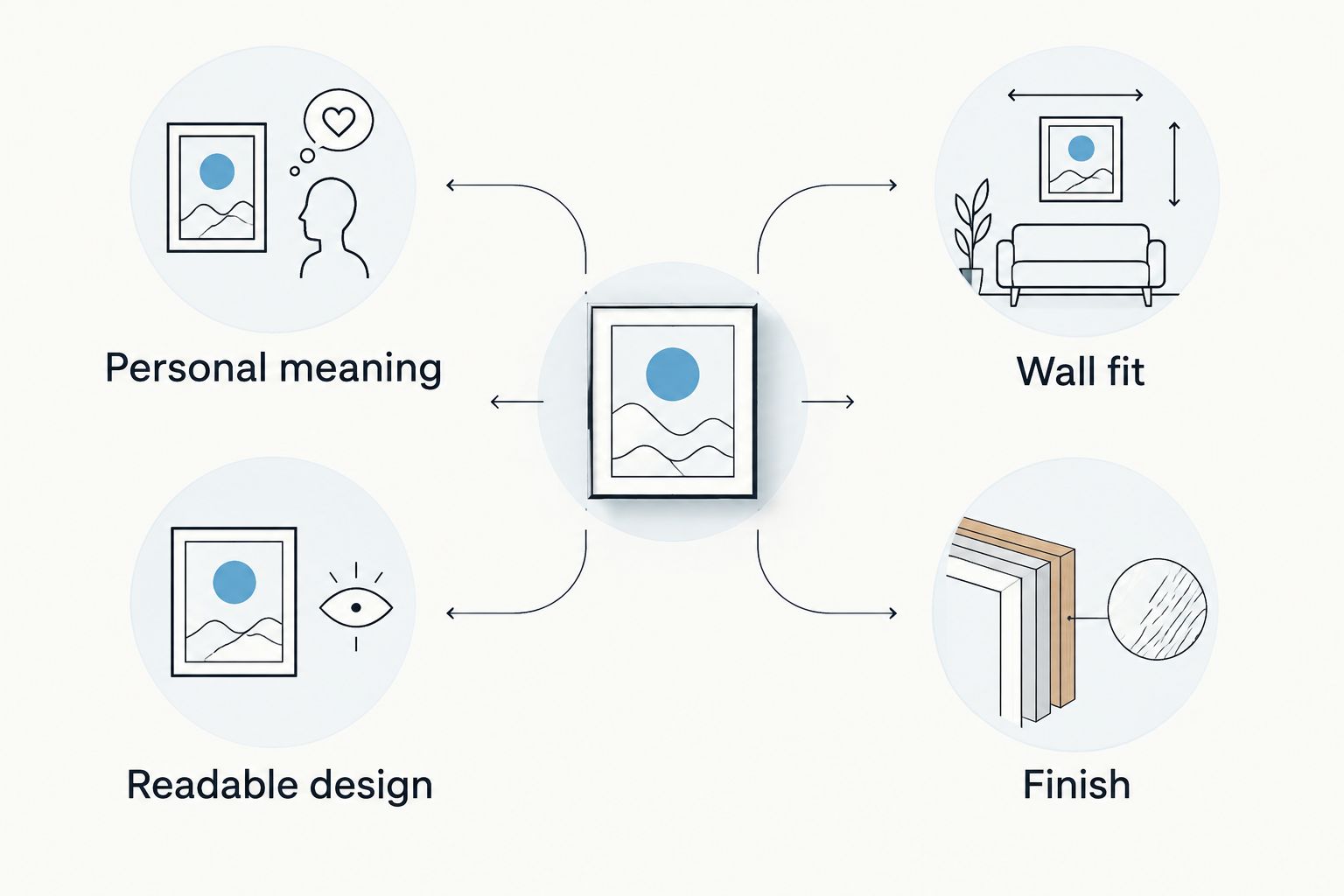
For 2026 shopping, the practical order is simple: settle the meaning, measure the wall, then inspect the individual listing. A design that feels personal but has unverified wording is not a confident gift.
Best islamic wall art at a glance
| Artwork | Best for | Standout feature | Key limitation |
|---|---|---|---|
| Islamic Calligraphy Mosque Canvas Print | A black-and-white focal piece | Calligraphic strokes form a mosque-like silhouette | No specific verse is identified in the supplied description |
| Geometric-pattern print | Quiet visual rhythm | Pattern carries the design without written text | Meaning rests more on the chosen design and recipient |
| Verified verse calligraphy | A gift centered on specific words | The selected text can make the gift personal | Wording, translation and attribution need checking |
| Architectural artwork | A recipient drawn to places and buildings | Architecture supplies a clear visual subject | The place depicted needs to matter to the recipient |
The table separates choices by purpose. It does not claim that Opulent Style sells the three other styles, or that every piece within a style has the same finish. Use the item sections as a decision tree.
1. Islamic Calligraphy Mosque Canvas Print: best for a black-and-white focal piece
The Islamic Calligraphy Mosque Canvas Print — Black Arabic Typography Wall Art is the named artwork in this guide. Its description identifies a matte stretched canvas with a black-and-white calligraphic design whose flowing strokes form a mosque-like silhouette. That combination makes the visual subject clear without requiring you to choose a named verse.
For a living room or entryway, ask whether the wall needs contrast more than color. This Opulent Style islamic wall art piece answers that specific brief; it is not a substitute for artwork selected around a particular passage. The supplied description does not identify the Arabic text, so do not give it as a gift on the assumption that it says something specific.
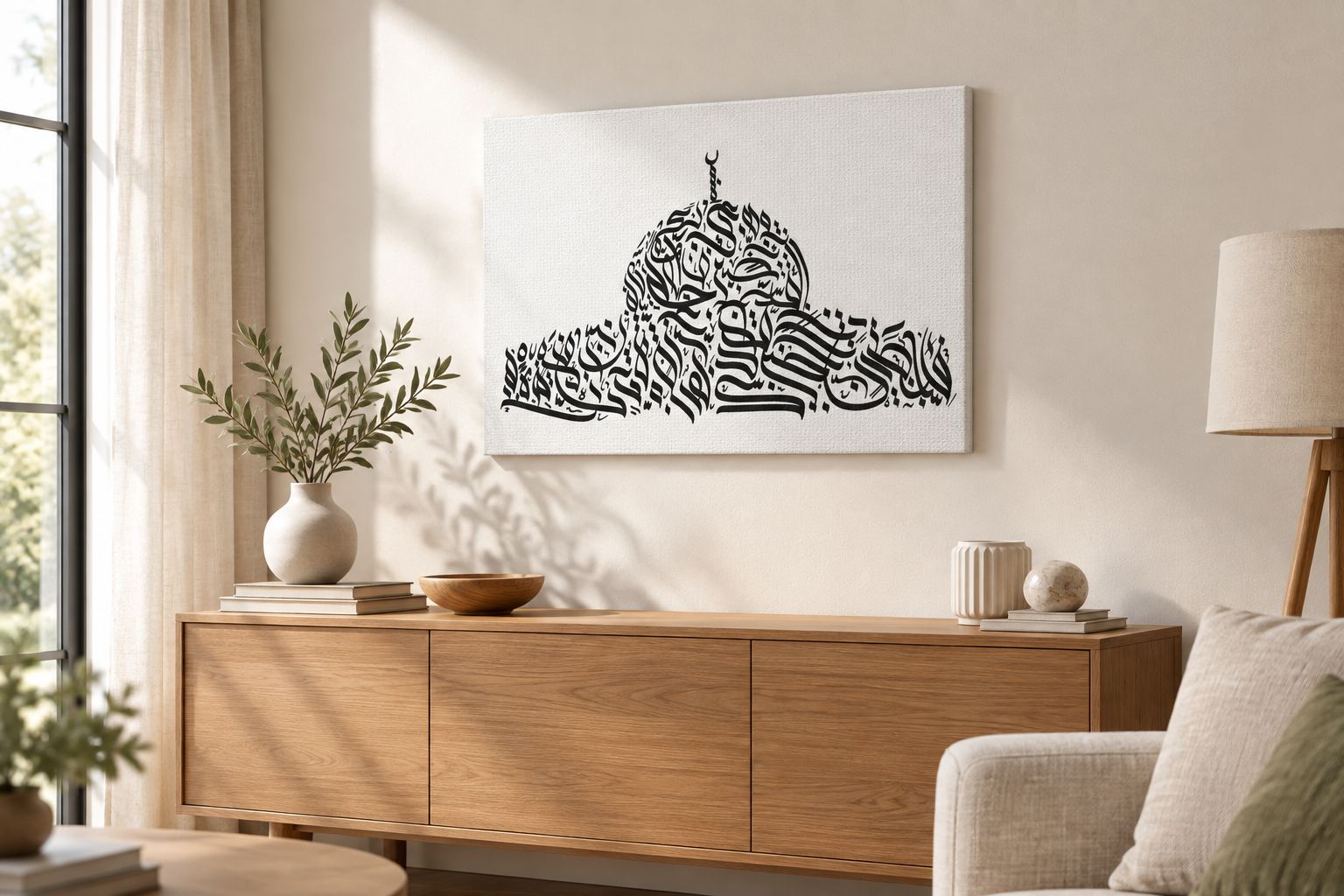
Islamic Calligraphy Mosque Canvas Print pros:
- Its black-and-white palette gives you a direct way to judge whether it fits an existing room.
- The mosque-like silhouette supplies a recognizable focal shape.
- The stated matte stretched-canvas format helps you compare its presentation with other finishes.
Islamic Calligraphy Mosque Canvas Print cons:
- It will not add color to a room that needs it.
- The supplied description does not establish a specific verse or translation.
Best for: Someone choosing art for its calligraphic form and architectural silhouette, rather than for a verified quotation. Verdict: Buy if that is the message you want the wall to carry; hold if exact wording is central to the gift.
2. Geometric-pattern print: best for quiet visual rhythm
Geometric art suits a room where pattern should contribute to the atmosphere without making written text the focal point. Look at the density of the design before choosing it. A tightly repeated pattern makes a different impression from broad shapes with open space, even when both are described as geometric.
This style earns its place because it removes a common gift-shopping problem: guessing which inscription a recipient would want displayed. It does not remove the need to know their taste. Compare the shapes and colors with what is already in the room, and inspect the listing for the actual print material and dimensions.
Geometric-pattern print pros:
- No translation is needed to understand the visual design.
- You can choose between detailed and restrained compositions.
- It works as an option when you know the recipient's room better than their preferred wording.
Geometric-pattern print cons:
- It will not carry the direct written message some recipients want.
- The term describes a style, not a guaranteed material or finish.
Best for: A recipient who enjoys pattern but has not asked for a particular inscription. Verdict: Buy when the individual design and dimensions fit the room; skip a generic pattern if the gift needs a more personal connection.
3. Verified verse calligraphy: best for a gift centered on specific words
Choose verse calligraphy when the words themselves are the reason for the gift. That requires more care than selecting a pleasing photograph of a print. Read the listing, confirm the Arabic text, check its translation and make sure the seller identifies the passage before you decide.
Presentation still matters. A long passage in small lettering asks the viewer to come close, while a shorter composition can be judged from farther away. Compare the actual artwork against the wall where it will hang; do not let the personal significance of the words hide a poor size match.
Verified verse calligraphy pros:
- The message can reflect something you know the recipient values.
- Confirmed text gives you a clear reason for choosing that particular piece.
- You can assess both the wording and its visual presentation.
Verified verse calligraphy cons:
- Attractive lettering alone does not verify an inscription.
- Small or ornate text can be hard to read in the intended space.
Best for: A recipient whose preferred passage you know, and an artwork whose text you can confirm. Verdict: Buy after verification; wait if the listing leaves the wording or translation unclear.
4. Architectural artwork: best for a recipient connected to a place
Architecture makes sense when a particular building or place has meaning for the recipient. The subject gives the artwork a story without requiring calligraphy to supply one. Check what the image actually depicts rather than treating any dome or arch as a specific landmark.
This is the most recipient-dependent choice in the ranking. A place-centered piece can feel thoughtful when you know the connection; without that connection, it is chiefly a visual preference. Judge its colors, crop and scale against the intended wall, then confirm the seller's identification of the subject if that identity matters to your gift.
Architectural artwork pros:
- A known place can give the gift a clear personal connection.
- The building itself provides a visual focal point.
- You can choose this style without relying on an inscription.
Architectural artwork cons:
- The meaning weakens if the place has no connection to the recipient.
- An image does not identify a landmark unless its source does.
Best for: Someone with a known attachment to the place shown. Verdict: Buy when the subject is confirmed and meaningful; otherwise choose by the room's visual needs instead.
How the ranking works
The order favors a choice a shopper can evaluate from a stated description, followed by styles that require progressively more knowledge of the recipient. The Opulent Style canvas has a described format, palette and visual subject. A geometric print depends on the individual design; verse calligraphy depends on verified wording; architectural artwork depends on a confirmed place and a personal connection.
This is a 2026 buying framework, not a claim that the four entries were tested side by side. Meaning and wall fit both have to work. A piece can pass one test and fail the other: a cherished passage still needs readable presentation, while a perfectly sized pattern still needs to suit the person living with it.
Which islamic wall art should you choose?
Choose the Opulent Style calligraphy canvas if you want the named black-and-white option with a mosque-like silhouette. Choose a geometric print when pattern matters more than text. Choose verified verse calligraphy only when you can check the words, and choose architectural art when the depicted place means something to the recipient.
If you are undecided in 2026, start with the message, not the frame. Decide whether the gift is about a visual feeling, particular words or a known place. Then measure the wall and compare the individual artwork's listed details. That sequence keeps a meaningful choice from becoming an awkward fit at home.
FAQ
What's the best islamic wall art for a living room in 2026?
The Opulent Style Islamic Calligraphy Mosque Canvas Print is the best named choice here for a black-and-white living-room focal piece. Measure the open wall and check the canvas dimensions before choosing it.
Is geometric art better than Arabic calligraphy for a gift?
Geometric art is the safer style when you do not know which words the recipient wants displayed. Calligraphy is more personal when you can verify the text and know it matters to them.
How do I choose the right size of islamic wall art?
Measure the open wall and compare it with the artwork's listed dimensions. Check the width of any furniture below the piece and consider how the design reads from your usual viewing position.
Does the Opulent Style canvas show a specific verse?
The supplied description does not identify a specific verse. It describes black Arabic typography forming a mosque-like silhouette, so do not assume a particular passage or translation.
What should I check before buying Arabic calligraphy art?
Check the exact Arabic text, its translation and any identified source before buying. If those details are missing, choose the work for its visual design rather than claiming it carries a specific message.
What makes architectural islamic wall art a meaningful gift?
A confirmed depiction of a place the recipient knows or values gives architectural art personal meaning. Verify the subject if that connection is the reason for your choice.
One last thing
A gift note can explain why you chose the artwork without claiming to translate text you have not verified. For the Opulent Style canvas, you can speak to the calligraphic form and mosque-like silhouette. In 2026, that distinction is small but valuable: the meaning you give the piece stays personal, and the description stays accurate.