Best overall: a simple pendant combining a hamsa and an eye motif. Best for adjustable wrist wear: a cord bracelet. Best for necklace-free styling: stud earrings. This 2026 guide compares evil eye hamsa jewelry by fit, materials, visibility, and gifting relevance for shoppers browsing Opulent Style.
- For Opulent Style shoppers choosing evil eye hamsa jewelry, a combined-symbol pendant is the best everyday starting point.
- Choose a cord bracelet for adjustable wrist wear; confirm its adjustment range before gifting.
- Stud earrings suit necklace-free styling, but piercing status and post materials matter.
- Treat protection symbolism as personal or cultural meaning, not a promised health or safety benefit.
Why this matters
A meaningful symbol does not automatically make a wearable gift. A beautiful pendant still needs a suitable chain length, and a ring still needs the correct size. Start with the recipient’s habits, then choose the meaning you want the piece to carry.
The hamsa is a hand-shaped motif associated with protection in several cultural and religious traditions. An eye motif is commonly worn as a symbol intended to ward off the evil eye. They are related symbols, not interchangeable names; a hamsa design does not necessarily contain an eye.
For your 2026 shortlist, look at the actual design rather than relying on its title. If you want both symbols, confirm that both appear in the piece. Let the recipient’s own relationship with the imagery guide the gift.
What makes the best evil eye hamsa jewelry
These criteria favor something you will enjoy wearing, not simply something that photographs well:
- Symbol clarity: The design visibly includes the hand, the eye, or both, matching what you intend to give.
- Material disclosure: The listing identifies the base metal, finish, and relevant components rather than saying only gold-colored or silver-colored.
- Fit: Chain length, bracelet adjustment range, ring size, or earring dimensions are stated clearly.
- Wearability: The shape works with your necklines, sleeves, hairstyle, and daily activities.
- Care requirements: Instructions explain how to handle the materials and finish. Appearance alone cannot establish water resistance.
- Personal meaning: The recipient welcomes the symbol, and the accompanying message respects their beliefs.
Choose meaning and fit together. Neither compensates for the other: a personally significant bracelet that feels uncomfortable is still the wrong everyday choice.
Evil eye hamsa jewelry at a glance
This 2026 ranking compares jewelry formats, not named products or tested models. Each format fills a different role; the limitation column tells you what to check before choosing.
| Rank and format | Best for | Standout feature | Key limitation |
|---|---|---|---|
| 1. Simple combined-symbol pendant | Everyday symbolic wear | Keeps the hand and eye together in one focal point | Chain length and pendant dimensions need checking |
| 2. Adjustable cord bracelet | Flexible wrist fit | An adjustable closure can accommodate different wrist preferences | Adjustment range and cord care vary |
| 3. Hamsa or eye stud earrings | Necklace-free styling | Places the motif near the face without a chain | Requires suitable piercings and disclosed post materials |
| 4. Hamsa or eye ring | A personal visual reminder | Keeps the motif within the wearer’s view | Ring sizing makes surprise gifting harder |
| 5. Hamsa or eye charm | Adding meaning to existing jewelry | Lets the recipient build on a piece they already wear | Attachment compatibility must be confirmed |
| 6. Larger combined-symbol pendant | Occasion styling | Gives the imagery a more visible role in an outfit | More space at the neckline is needed |
1. Simple combined-symbol pendant: best for everyday wear
A simple combined-symbol pendant places an eye motif within or alongside a hamsa. It is the clearest starting point when you specifically want evil eye hamsa jewelry rather than either symbol alone. Choose the scale and chain length around the clothes the recipient already wears.
Simple combined-symbol pendant pros:
- Brings both motifs into one piece.
- Offers a single focal point rather than several separate charms.
- Avoids the exact finger sizing required by a ring.
Simple combined-symbol pendant cons:
- A necklace can sit awkwardly against a frequently worn neckline.
- A photograph does not establish the pendant’s size or weight.
Best for: Someone who already wears necklaces and wants a clear, understated expression of personal meaning.
For Opulent Style shoppers, this evil eye hamsa jewelry format is the default recommendation because it answers the combined-symbol brief directly. That recommendation concerns the format, not an unverified product’s construction or performance.
Verdict: Buy this format when both symbols are visible and the chain measurements suit the wearer.
2. Adjustable cord bracelet: best for flexible wrist fit
A cord bracelet with a hamsa and eye motif suits someone who prefers jewelry at the wrist. A sliding or otherwise adjustable closure gives you flexibility, but only within the adjustment range stated for that particular bracelet. Adjustable does not mean universal fit.
Adjustable cord bracelet pros:
- Offers fit flexibility when the closure is genuinely adjustable.
- Keeps the symbol visible without requiring a necklace.
- Provides a different styling option for someone who favors softer-looking accessories.
Adjustable cord bracelet cons:
- Cord materials and care requirements differ between designs.
- Dangling ends or raised charms can interfere with sleeves and desk work.
Best for: A recipient who likes wrist jewelry and whose preferred fit falls within the listed range.
Check how the bracelet opens as well as how it tightens. A closure that feels easy for you is not automatically easy for the recipient. For a 2026 gift, practical comfort deserves as much attention as the motif.
Verdict: Buy for flexible wrist wear; skip designs with an unclear adjustment range.
3. Hamsa or eye stud earrings: best for necklace-free styling
Stud earrings bring symbolic detail near the face while leaving the neckline free. They suit someone who avoids necklaces or wants jewelry that does not compete with a collar. If your brief requires both symbols, check whether each stud combines them or the pair divides them between ears.
Hamsa or eye stud earrings pros:
- Work independently of necklace length and neckline placement.
- Keep the motif localized rather than hanging from a chain.
- Offer a clear alternative for an established earring wearer.
Hamsa or eye stud earrings cons:
- Require compatible ear piercings unless explicitly described otherwise.
- Post and backing materials need checking, not just the decorative front.
Best for: Someone who regularly wears studs and prefers a clear neckline.
Ask what the recipient already wears comfortably. Do not assume a piece is suitable for sensitive ears because it looks simple, has a precious-metal finish, or uses the word gentle in its description.
Verdict: Buy when piercing status and materials are confirmed; hold when either is uncertain.
4. Hamsa or eye ring: best for a personal visual reminder
A symbolic ring stays within your own field of view during ordinary activities. That makes it a thoughtful format when the wearer wants the imagery for themselves, rather than primarily as a visible outfit detail. The main buying decision is fit.
Hamsa or eye ring pros:
- Keeps the motif visible to the wearer.
- Does not require a chain or pierced ears.
- Can accompany jewelry the recipient already wears on other fingers.
Hamsa or eye ring cons:
- Requires the correct size for the intended finger.
- Raised or openwork designs need checking against everyday tasks.
Best for: Someone whose ring size and preferred finger are known.
An adjustable ring still needs a stated size range and clear adjustment instructions. Do not force the band to fit or assume every adjustable design tolerates repeated reshaping.
Verdict: Buy with a confirmed fit; skip as a surprise gift when sizing is unknown.
5. Hamsa or eye charm: best for existing jewelry
A separate charm adds symbolism to a necklace or bracelet the recipient already owns. This is a thoughtful choice when you know they enjoy building a personal collection. It is not a complete wearable piece unless the necessary chain, bracelet, or attachment is included.
Hamsa or eye charm pros:
- Adds meaning without replacing a familiar piece.
- Lets the recipient choose placement on compatible jewelry.
- Works well for someone who intentionally collects symbolic charms.
Hamsa or eye charm cons:
- The attachment must fit the existing jewelry.
- An additional component is needed when no suitable base piece exists.
Best for: A charm collector whose jewelry attachment system you can verify.
Check the opening, connector type, and whether the charm is removable. A similar appearance does not establish compatibility. Ask the seller when measurements or attachment details are unclear.
Verdict: Buy only after confirming compatibility; hold if you are guessing.
6. Larger combined-symbol pendant: best for occasion styling
A larger pendant gives the hand and eye imagery more space in the outfit. Choose this format for someone who likes a visible focal piece rather than discreet daily jewelry. Its appeal is presence, not guaranteed comfort or a particular material.
Larger combined-symbol pendant pros:
- Makes the symbolic design easier to feature in an outfit.
- Provides room for visible decorative detail.
- Suits a recipient who already enjoys statement necklaces.
Larger combined-symbol pendant cons:
- Needs a neckline that leaves enough room for the design.
- Size and weight require particular attention before choosing.
Best for: Someone who deliberately selects statement jewelry for occasions.
Verdict: Buy for an established statement-necklace wearer; skip as the default everyday gift.
Read the materials before choosing
For your 2026 purchase, separate metal composition from color. Sterling silver contains 92.5% silver; a 925 mark refers to that composition. It does not tell you the chain length, establish every component’s composition, or promise that a wearer will never react to the piece.
14-karat gold contains approximately 58.3% gold, while 18-karat gold contains 75% gold. Those descriptions concern alloy composition when the item itself is identified accordingly. A gold-colored finish does not establish either composition, and gold plating does not make the underlying piece solid gold.
Read the complete description, including the base metal and any plating. If a listing leaves those details unclear, ask before choosing. Do not fill the gaps with assumptions based on photographs, color, or the symbolism.
Match the gift to the person
Use this sequence before committing to a design:
- Wear habits: Start with the jewelry type the recipient actually wears.
- Symbol preference: Confirm whether they welcome the hand, the eye, or both.
- Fit details: Check the relevant chain, wrist, finger, or earring measurements.
- Material details: Read the base metal, finish, and component descriptions.
- Gift message: Explain your intention without promising protection or healing.
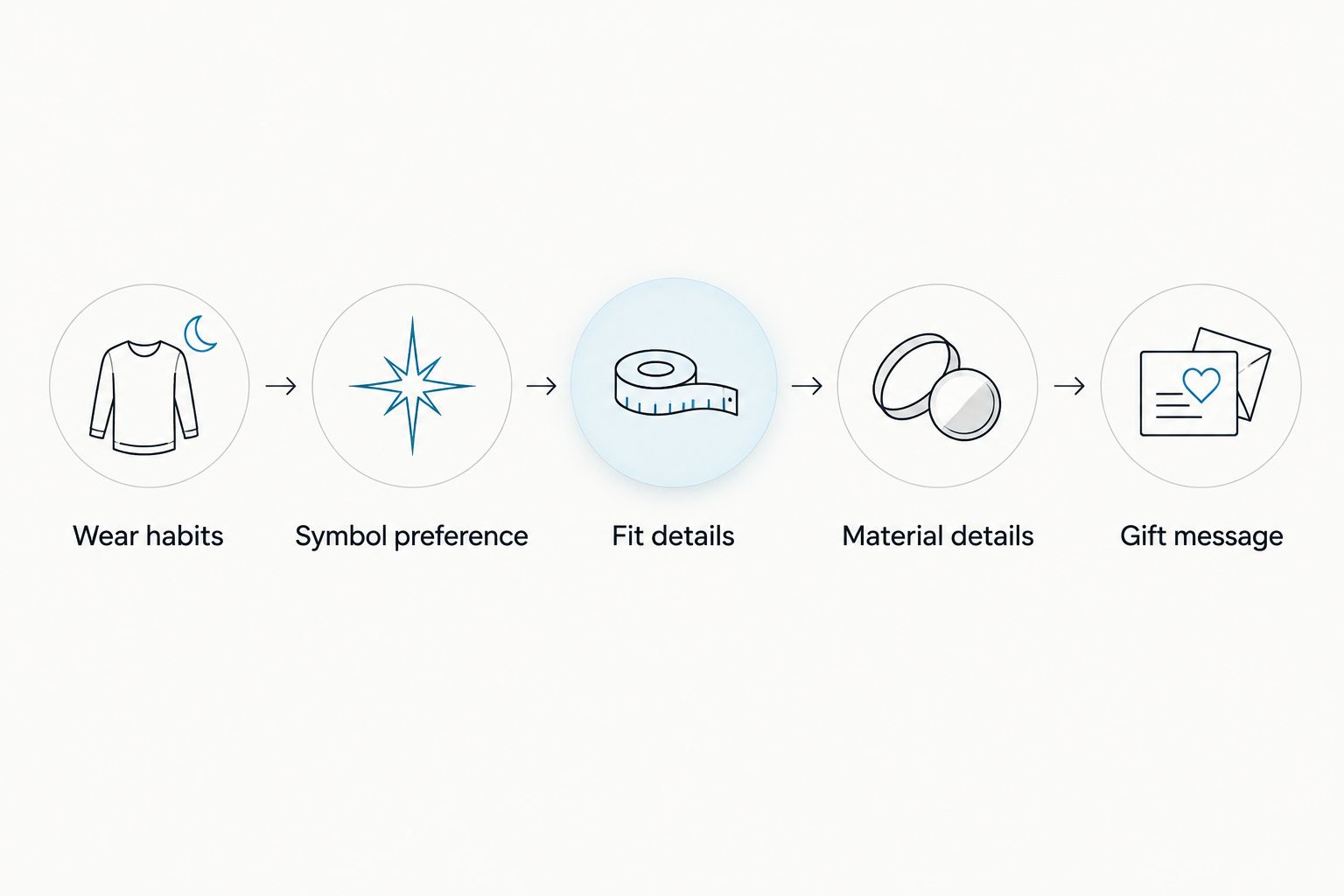
Opulent Style’s meaningful-gift focus fits this person-first approach. A note about why the symbol reminded you of the recipient is more considerate than assigning a belief to them. Keep the message about care, encouragement, or a shared memory.
How these formats were ranked
The 2026 ranking prioritizes symbol clarity, fit, material disclosure, wearability, care, and personal meaning. The simple combined-symbol pendant leads because it directly combines the requested imagery without requiring finger sizing or ear piercings.
The remaining formats win distinct use cases rather than compete for the same buyer. This is a format-selection guide, not a claim that particular products underwent wear testing.
Which evil eye hamsa jewelry should you choose?
Choose a simple combined-symbol pendant if you are undecided and the recipient already wears necklaces. Move to a cord bracelet for wrist wear, studs for necklace-free styling, or a ring when you know the size.
Choose a separate charm only for compatible existing jewelry. Reserve a larger pendant for someone who enjoys statement pieces. The best choice is the one whose meaning and physical format both belong in the recipient’s life.
FAQ
What’s the best evil eye hamsa jewelry for an everyday gift?
A simple pendant combining a hamsa and an eye motif is the best starting point for someone who already wears necklaces. Confirm the chain length, pendant dimensions, and materials before choosing.
Are the evil eye and the hamsa the same symbol?
No, the evil eye motif and the hamsa are different symbols. The hamsa is hand-shaped, and some designs incorporate an eye within the hand; check the design if you want both.
Is an evil eye hamsa bracelet better than a necklace?
An evil eye hamsa bracelet is better for someone who prefers wrist jewelry; a necklace is better for an established necklace wearer. Match the format to their habits and verify the fit.
Does evil eye hamsa jewelry actually protect you?
Evil eye hamsa jewelry carries protection symbolism, not a guaranteed safety or health benefit. Its meaning depends on the wearer’s personal, cultural, or religious relationship with the imagery.
Can I wear evil eye hamsa jewelry every day?
Daily wear suitability depends on the specific piece’s materials, construction, fit, and care instructions. The symbol alone does not establish durability or suitability for water exposure.
What should I check when buying symbolic earrings for sensitive ears?
Check the stated materials of the posts, backings, and decorative components. Do not assume a finish or a general comfort claim establishes suitability for the recipient’s known sensitivities.
Is evil eye hamsa jewelry a thoughtful gift for someone with different beliefs?
It is a thoughtful gift when the recipient welcomes the symbolism. Ask about their preferences rather than assuming a shared interpretation, and explain your intention without promising protection.
One last thing
Before wrapping your 2026 gift, imagine the recipient wearing it with their most familiar outfit. If you cannot picture the fit, choose with them instead. A surprise is optional; feeling understood is the point of a meaningful gift from Opulent Style.