Best overall: a minimalist hamsa hand necklace. Best for layered symbolism: an eye-motif hamsa. Best for uncertain fit: an adjustable-chain hamsa. This 2026 guide from Opulent Style compares necklace styles by material, wearability and gifting relevance, so you can choose a meaningful design without treating symbolism as a promise of protection.
- A minimalist hamsa hand necklace wins overall for understated wear and straightforward gifting.
- Choose an eye-motif hamsa when the recipient specifically values both symbols.
- An adjustable-chain hamsa necklace is the best starting point when preferred length is uncertain.
- Opulent Style prioritizes personal meaning in jewelry gifts; material and fit still need your attention.
Why this matters
A hamsa pendant can carry cultural significance, express a personal belief or simply be a hand-shaped design someone enjoys wearing. Those reasons are not interchangeable. Before choosing a gift, establish what the symbol means to the recipient rather than assigning meaning on their behalf.
The hamsa appears in Jewish, Muslim and other cultural traditions, commonly associated with protection against the evil eye. That describes a symbolic tradition, not a demonstrated protective effect. A thoughtful gift respects both the symbol's context and the wearer's interpretation.
Opulent Style is best for shoppers seeking jewelry gifts centered on personal meaning. For a hamsa hand necklace in 2026, that means matching the design to the person first, then checking the construction and fit.
What makes the best hamsa hand necklace
These criteria separate a necklace someone wants to wear from one that merely looks appealing in a photograph:
- Material clarity: Look for the pendant's base metal, surface finish and chain material. Gold-colored does not mean solid gold, and the chain need not match the pendant's composition.
- Comfortable fit: Check chain length, pendant dimensions and adjustment options. Compare the measurements with a necklace the recipient already wears.
- Wearable design: Look at the silhouette, edges, decorative details and how the pendant sits. A recognizable motif need not be heavily ornamented.
- Personal meaning: Establish whether the recipient prefers a plain hand, an eye motif or decorative detailing. Do not assume every hamsa communicates the same message to every wearer.
- Practical construction: Inspect the clasp, pendant connection and care instructions. A design needs to suit the recipient's routine as well as their taste.
Material and symbolism answer different questions. Material tells you what the necklace is made from; symbolism tells you why someone might choose it. Neither replaces a fit check.

Best hamsa necklaces at a glance
This 2026 ranking compares design and material categories, not individual product listings. Features such as an adjustable chain or a particular metal belong only to necklaces whose own descriptions confirm them.
| Rank and necklace style | Best for | Standout feature | Key limitation |
|---|---|---|---|
| 1. Minimalist hamsa | Understated everyday styling | A simple hand silhouette | Less decorative detail for someone seeking ornament |
| 2. Eye-motif hamsa | Recipients who value both symbols | An eye incorporated into the hand | Adds a symbol the recipient might not want |
| 3. Adjustable-chain hamsa | Uncertain preferred necklace length | More than one wearing position | Adjustment range still needs checking |
| 4. Sterling silver hamsa | Someone who already wears silver | A defined silver alloy | Silver requires tarnish care |
| 5. Solid-gold hamsa | A keepsake selected by material | Gold alloy rather than a gold-colored surface | Karat and alloy composition still matter |
| 6. Statement hamsa | A necklace intended as an outfit focal point | A more prominent pendant | Size and weight can affect comfort |
The categories can overlap. A minimalist necklace can also have an adjustable chain or a sterling silver pendant. Start with the use case, then use the other criteria to narrow your choice.
1. Minimalist hamsa: best hamsa necklace for everyday styling
A minimalist hamsa uses a simple hand outline or restrained pendant design. It keeps the motif central without asking decorative stones, engraving or elaborate metalwork to carry the look.
This is the strongest default for someone who already wears understated jewelry. Simplicity also leaves space for the recipient's own interpretation rather than attaching several visual messages to one gift.
Minimalist hamsa pros:
- A clear silhouette keeps attention on the hand motif.
- Restrained detailing suits a preference for understated accessories.
- A simple design can complement rather than compete with other jewelry.
Minimalist hamsa cons:
- It offers less ornament for someone who enjoys detailed pieces.
- A very small pendant can make the motif harder to distinguish.
Best for: A recipient whose existing necklaces are simple and unobtrusive.
For your 2026 shortlist, compare the pendant measurements with a familiar necklace. Minimalist describes appearance, not size, weight or metal quality.
Verdict: Buy a minimalist hamsa when understated wear is the priority.
2. Eye-motif hamsa: best hamsa necklace for layered symbolism
An eye-motif hamsa places an eye within the hand design. It brings together two motifs associated with protection in cultural traditions, while remaining a piece of jewelry rather than a protective device.
Choose this style when the recipient has expressed interest in both symbols. An eye should be a deliberate part of the gift, not a detail you overlook because the pendant is attractive.
Eye-motif hamsa pros:
- Combines the hand and eye in one pendant.
- Gives the design a distinct central detail.
- Offers a specific match for someone who already wears eye motifs.
Eye-motif hamsa cons:
- The added symbol is not every recipient's preference.
- Decorative eye details need their own material and care checks.
Best for: Someone who personally values both the hamsa and eye motifs.
Read descriptions of stones, enamel or other decoration individually. An image does not establish whether a colored detail is a gemstone, glass or another material.
Verdict: Buy an eye-motif hamsa only when both symbols feel right for the wearer.
3. Adjustable-chain hamsa: best hamsa necklace for uncertain fit
An adjustable-chain hamsa provides a documented way to change the necklace's wearing length. Depending on the construction, that adjustment can use an extender, alternative fastening points or a sliding mechanism.
The useful feature is flexibility, not guaranteed fit. You still need the shortest and longest wearable lengths, along with a clear description of how the adjustment works.
Adjustable-chain hamsa pros:
- Gives the wearer a choice of pendant position.
- Helps accommodate different neckline preferences.
- Provides flexibility when the preferred length is not settled.
Adjustable-chain hamsa cons:
- The adjustment range might not include the desired length.
- Some adjustment mechanisms require more dexterity than others.
Best for: A gift recipient whose preferred chain length you do not know precisely.
Before buying in 2026, ask for measurements rather than relying on the word adjustable. Check whether the stated length includes an extender and whether the pendant moves freely on the chain.
Verdict: Buy an adjustable-chain hamsa after confirming its actual wearing range.
4. Sterling silver hamsa: best hamsa necklace for silver wearers
Sterling silver is an alloy containing 92.5% silver by mass. A 925 mark denotes that fineness, though a mark alone does not independently verify an item's authenticity.
A sterling silver hamsa is a sensible material-led choice when the recipient already favors silver jewelry. Check the pendant and chain separately, including whether either component has a surface coating.
Sterling silver hamsa pros:
- The material has a defined silver content.
- Suits a recipient who prefers the appearance of silver.
- Allows a clear distinction from silver-colored base metal.
Sterling silver hamsa cons:
- Silver can tarnish and needs appropriate care.
- Alloy ingredients and coatings still matter for sensitive skin.
Best for: Someone who regularly chooses silver and is comfortable with its care needs.
Do not interpret sterling silver as a universal skin-safety claim. Follow the listing's composition and care information rather than assuming every silver necklace behaves identically.
Verdict: Buy a sterling silver hamsa when silver is the recipient's established preference.
5. Solid-gold hamsa: best hamsa necklace for a material-led keepsake
A solid-gold hamsa uses a gold alloy rather than relying solely on a gold-colored surface layer. Karat describes gold content: 14-karat gold contains 14 parts gold out of 24, approximately 58.3% gold by mass.
Choose this category when the recipient specifically wants a gold-alloy necklace. The designation does not establish the pendant's dimensions, whether its construction is hollow or solid throughout, or the composition of the chain.
Solid-gold hamsa pros:
- Has gold content defined by its stated karat.
- Distinguishes material choice from surface color alone.
- Suits a recipient with a clear preference for gold jewelry.
Solid-gold hamsa cons:
- Different alloys have different compositions and care considerations.
- The words solid gold do not establish weight or construction.
Best for: A keepsake buyer whose recipient specifically prefers gold alloy.
For a 2026 purchase, read the pendant, chain and clasp specifications separately. Do not transfer a material claim from one component to the entire necklace.
Verdict: Buy a solid-gold hamsa only after confirming karat and component materials.
6. Statement hamsa: best hamsa necklace for a focal-point accessory
A statement hamsa puts more visual emphasis on the pendant through scale, ornament or both. It suits someone who wants the necklace to be a noticeable part of an outfit rather than a quiet finishing detail.
The strongest choice reflects the recipient's existing habits. Someone who enjoys prominent pendants is a better match than someone who removes jewelry whenever it feels conspicuous.
Statement hamsa pros:
- Makes the hand motif a visible design feature.
- Gives decorative details more room in the composition.
- Suits a wearer who likes an intentional focal point.
Statement hamsa cons:
- A prominent pendant requires closer size and weight checks.
- Raised or open details need checking against fabrics they will touch.
Best for: Someone who already wears noticeable pendants with confidence.
Check front and side photographs where provided. The side profile helps you assess thickness and raised elements that a front-facing image can hide.
Verdict: Buy a statement hamsa for a confirmed statement-jewelry wearer; skip it as a default gift.
Check fit before attaching meaning
A meaningful necklace still needs to sit where the wearer wants it. Use a necklace they already like as your reference, rather than treating a model photograph as a fit prediction.
Measure the familiar chain end to end while it lies flat. Record the pendant's height and width separately, then compare those measurements with the candidate necklace's stated dimensions.
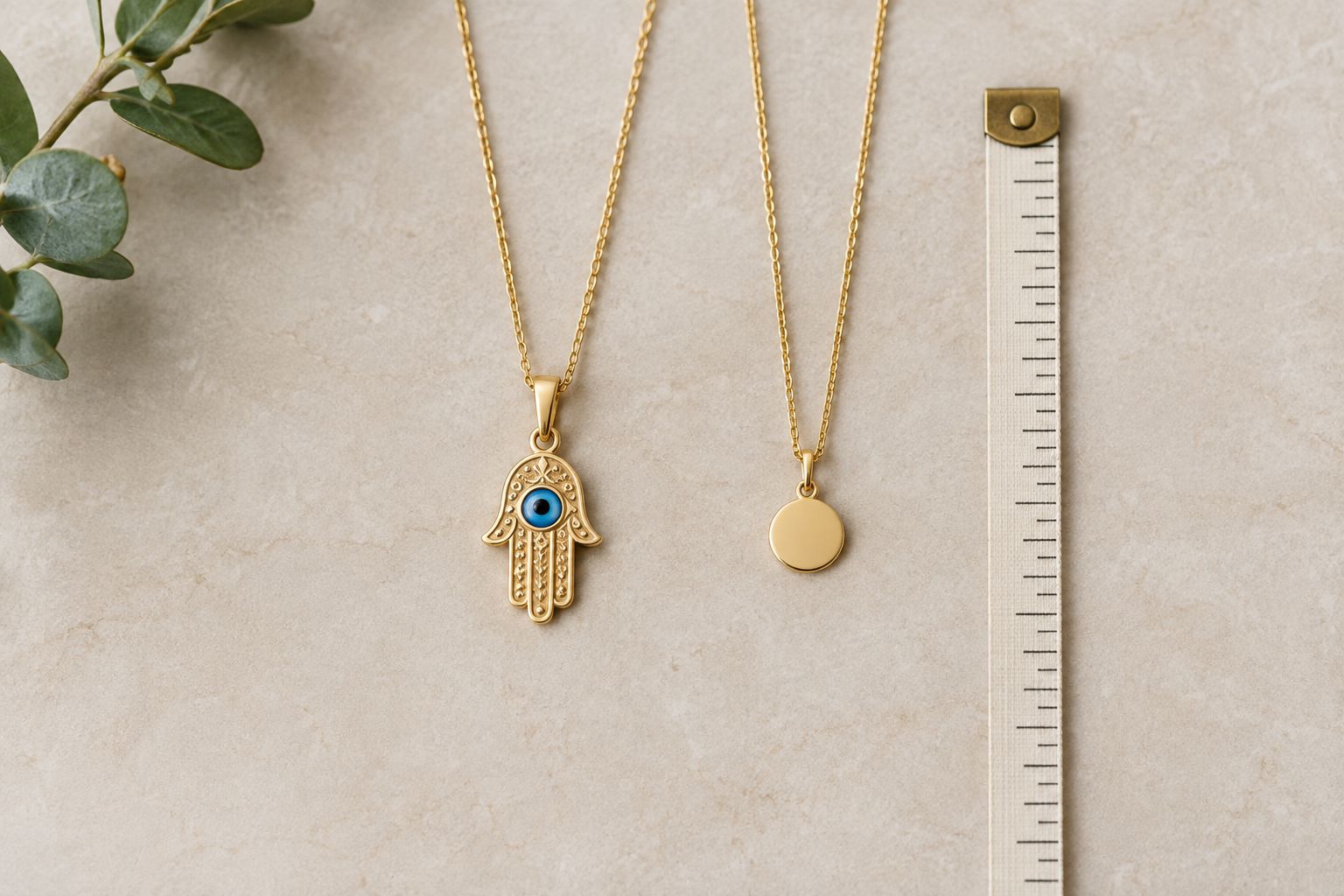
Check these details before making the final choice:
- Pendant position: Think about the neckline the recipient wears most often.
- Clasp handling: Consider whether the wearer finds small fastenings comfortable to use.
- Fabric contact: Check raised edges, pointed details and openings against delicate clothing.
- Layering space: Compare the necklace with existing pieces rather than assuming they will sit separately.
For a surprise gift, look at the recipient's current jewelry or ask a simple preference question. That information is more useful than guessing what a meaningful necklace should look like.
How the styles rank
The ranking prioritizes an understated default, then gives distinct slots to symbolism, fit, metal preference and visual presence. Minimalist hamsas rank first because they answer the broadest styling brief in this guide—not because a specific necklace has been tested against every alternative.
Material clarity, comfortable fit and personal meaning remain the deciding criteria. A lower-ranked category becomes the better choice as soon as it matches the recipient more closely.
Which hamsa necklace should you choose?
Choose a minimalist hamsa hand necklace if you need a starting point and the recipient already likes restrained jewelry. Add an adjustable chain when fit flexibility matters, then select a documented material that matches their preferences.
Choose an eye-motif or statement design only when you have a clear reason. More symbolism and more decoration do not automatically make a gift more personal.
Opulent Style's hamsa hand necklace guide puts the recipient's interpretation ahead of a generic gift message. A short note explaining why you thought of them is more considerate than promising what the necklace will do.
FAQ
What's the best hamsa hand necklace for everyday wear?
A minimalist hamsa hand necklace is the best starting point for understated everyday styling. Confirm pendant size, chain length and materials before choosing a particular necklace.
What does a hamsa necklace mean?
A hamsa necklace commonly symbolizes protection against the evil eye in several cultural traditions, including Jewish and Muslim contexts. Its personal meaning depends on the wearer; symbolism does not establish a real protective effect.
Is an eye-motif hamsa better than a plain hamsa?
An eye-motif hamsa is better only when the wearer wants both symbols. A plain hamsa is the clearer choice for someone who prefers the hand motif without an additional eye detail.
Is sterling silver the same as silver-plated jewelry?
Sterling silver and silver-plated jewelry are different materials. Sterling silver contains 92.5% silver by mass, while silver plating is a surface layer over another material.
Does solid gold mean a necklace is pure gold?
Solid gold does not necessarily mean pure gold. Karat states the gold content of the alloy, and the pendant and chain need separate material checks.
How do I choose a hamsa necklace as a gift?
Choose a hamsa necklace by matching the recipient's interpretation of the symbol, preferred metal and existing necklace fit. Ask about preferences when possible rather than assuming a spiritual motif suits everyone.
Can a hamsa necklace provide healing or protection?
A hamsa necklace is not a medical treatment or a guarantee of protection. A wearer can value its cultural symbolism or use it as a personal reminder without treating it as a proven intervention.
One last thing
Solid gold and solid construction are different descriptions. A necklace can have a stated gold-alloy composition without that statement telling you whether the pendant is hollow, how much it weighs or what the chain contains.
For your 2026 gift, pair the symbol with an honest message: why it reminded you of the recipient, what you admire about them or what you hope they remember. You do not need to promise protection to make someone feel seen.