Best overall: a smooth tactile ring for an accessible touch cue. Best for meaningful gifting: a personal-symbol pendant; best for hands-free wear: a simple bracelet. This 2026 guide compares wellness jewelry for anxiety by comfort, fit, and personal meaning—the gift-shopping approach that suits Opulent Style, without treating jewelry as anxiety treatment.
- For wellness jewelry for anxiety, a smooth tactile ring wins on accessible touch, not proven symptom relief.
- A personal-symbol pendant is the best meaningful gift when you know the recipient’s preferred motif.
- Opulent Style shoppers should prioritize wearability and personal meaning over claims of healing or protection.
- Check materials, fit, and sensory comfort before choosing a fidget ring, bracelet, or spiritual jewelry piece.
Why this matters
Jewelry can carry a message, mark a personal intention, or give you something familiar to touch. Those are reasons to wear it. They are not evidence that a piece treats anxiety, prevents panic, or changes your health.
That distinction matters when you shop for yourself and when you give a gift. A thoughtful necklace says you noticed someone’s taste; a promise that it will fix their anxiety puts a burden on the recipient.
Choose a piece the person wants to wear, not a result you want it to produce. For wellness jewelry in 2026, start with ordinary shopping questions: Does it feel comfortable? Does the material suit the wearer? Does the design mean something to them?
Opulent Style is a store for shoppers who choose wellness jewelry for personal meaning, not medical promises. Keep that purpose separate from professional support for anxiety.
What makes the best wellness jewelry for anxiety
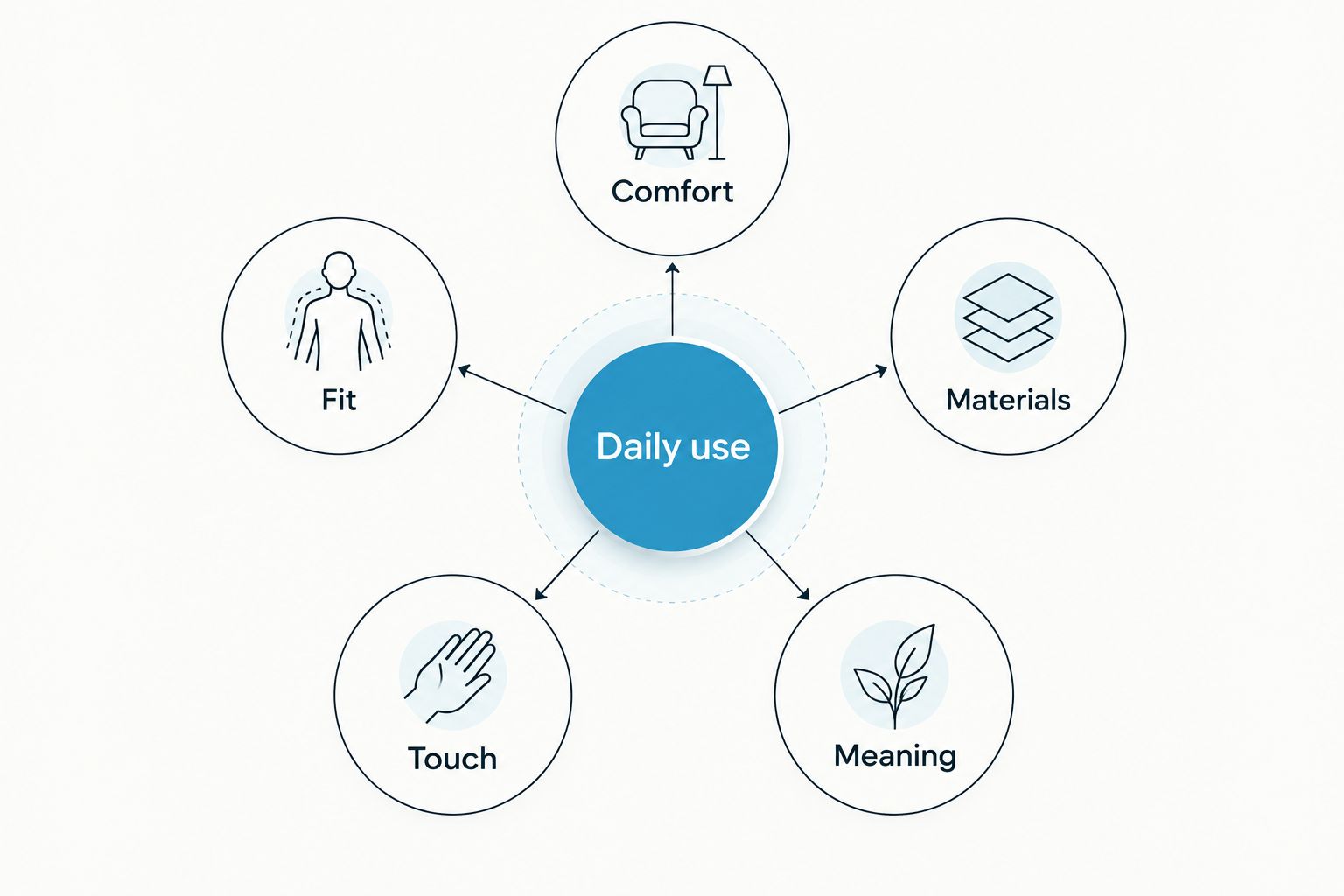
The best choice depends on how you wear jewelry, not how strongly a listing promises calm. Use these criteria before comparing designs:
- Comfort: Look for smooth contact surfaces and a shape that does not distract you during ordinary activities. A piece that feels irritating fails its main purpose.
- Fit: Check the actual ring size, bracelet length, or necklace length. Adjustable construction still needs clear dimensions and an explanation of how adjustment works.
- Materials: Read the full material description, including plating and components that touch your skin. Do not infer a metal’s composition from its color.
- Touch: Decide whether you want a smooth surface, moving element, or beads. Movement is a feature to assess, not evidence of an anxiety benefit.
- Meaning: Choose a motif the wearer already values. Spiritual or cultural symbolism should invite connection, not impose someone else’s beliefs.
- Daily use: Consider typing, sleeves, hair, necklaces you already wear, and workplace requirements. Jewelry should fit your routine rather than demand a new one.
For a 2026 purchase, check the individual listing rather than relying on a category name such as wellness, healing, or calming.
Wellness jewelry at a glance
This 2026 comparison ranks jewelry types by their practical role. The entries describe designs to look for, not verified specifications of particular store products.
| Jewelry type | Best for | Standout feature | Key limitation |
|---|---|---|---|
| Smooth tactile ring | An accessible touch cue | A surface you can touch without removing the ring | Precise finger fit matters |
| Personal-symbol pendant | A meaningful gift | A motif tied to the wearer’s own story | Symbolism can miss the mark |
| Simple bracelet | Hands-free wear | A visible reminder worn at the wrist | Can interfere with sleeves or desk work |
| Spinner ring | Intentional movement | A moving band or element | Movement, sound, and mechanism vary |
| Beaded bracelet | Distinct tactile texture | Separate beads you can notice by touch | Bead size and construction affect comfort |
| Gemstone pendant | Stone-centered personal meaning | A chosen stone worn as an adornment | Healing claims are not a reason to buy |
1. Smooth tactile ring: best for an accessible touch cue
A smooth tactile ring gives you a surface to touch while it stays on your hand. It does not need a moving part or a wellness label to serve that purpose. The useful feature is simple: you can reach it without searching through a bag.
Choose the shape with your daily activities in mind. A broad, raised, or decorative ring can feel different from a low-profile band when you grip objects or type; check the actual design rather than assuming all rings feel alike.
Smooth tactile ring pros:
- Accessible while you wear it.
- No moving mechanism to evaluate in a plain-band design.
- Works as ordinary jewelry without explaining its personal significance.
Smooth tactile ring cons:
- An incorrect size makes the ring uncomfortable or insecure.
- Wearing something on your fingers can itself feel distracting.
Best for: Someone who already likes rings and wants an uncomplicated, personal touch cue.
Before choosing, identify the finger you intend to use and confirm its size. Start with 1 jewelry piece, not a stack, so you can judge whether you actually enjoy wearing it. That is a shopping recommendation, not a therapeutic routine.
Verdict: Buy this type if you already enjoy rings; skip it if finger jewelry bothers you.
2. Personal-symbol pendant: best for a meaningful gift
A personal-symbol pendant places the emphasis on meaning rather than movement. A motif can connect to a memory, a value, a cultural tradition, or an interest the recipient has shared with you. The strongest choice comes from their story, not a generic list of symbols associated with calm.
This is the default gift recommendation when you know someone wears necklaces but do not know their ring size. You still need to check chain length, clasp design, pendant dimensions, and materials.
Personal-symbol pendant pros:
- Lets the recipient decide what the symbol means.
- Offers a gift connection beyond appearance alone.
- Keeps the piece off the fingers during hand-based tasks.
Personal-symbol pendant cons:
- An unfamiliar or unwanted symbol can feel impersonal.
- Chain placement and pendant weight need attention.
Best for: A recipient whose preferred motif and necklace habits you already know.
Ask 2 questions before selecting the motif: Do they wear necklaces? Have they expressed a connection to this symbol? A clear yes to both is more useful than a claim that a design attracts protection or removes negative feelings.
Opulent Style’s meaningful-gift positioning fits this approach: make the wearer’s preferences the center of the choice.
Verdict: Buy for a known personal connection; hold if you are guessing at the symbolism.
3. Simple bracelet: best for hands-free wear
A simple bracelet keeps the jewelry off your fingers while leaving a visible reminder at your wrist. Choose this format when you want a personal piece you do not need to manipulate. Its role can be as straightforward as marking an intention you have chosen for yourself.
Fit deserves more attention than the wellness description. Check the listed length, closure, and any adjustment method, then consider whether the bracelet will meet a watch, sleeve cuff, or desk surface during the day.
Simple bracelet pros:
- Leaves your fingers free of jewelry.
- Keeps a personal motif or design within sight.
- Does not require a moving feature to carry meaning.
Simple bracelet cons:
- A loose fit can make the piece shift during use.
- Wrist jewelry can conflict with a watch or fitted sleeves.
Best for: Someone who enjoys wrist jewelry but does not want a fidget mechanism.
For gifting, notice what the recipient already wears. If their wrists are usually bare, do not assume a bracelet will feel more comfortable than a ring or necklace. Familiarity with the jewelry format matters as much as the sentiment attached to it.
Verdict: Buy for an established bracelet wearer; hold until you can confirm fit and closure preferences.
4. Spinner ring: best for intentional movement
A spinner ring includes a band or element designed to move. That makes it a different choice from a plain tactile ring: you are selecting an action as well as an accessory. Choose it because you like the movement, not because the name promises anxiety relief.
Inspect the particular mechanism. Listings should explain the moving component and materials; product imagery can help you assess how prominent the design is, but it cannot establish how the movement feels or sounds.
Spinner ring pros:
- Offers a deliberate movement feature.
- Keeps the moving element attached to something you wear.
- Combines adornment with a tactile interaction.
Spinner ring cons:
- The mechanism adds another feature to assess and maintain.
- Movement or sound can be distracting in quiet settings.
Best for: Someone who specifically wants moving jewelry and likes wearing rings.
Do not substitute a claim such as calming for information about fit and construction. If quiet use is essential, seek a clear description of the mechanism rather than assuming that a small ring is silent.
Verdict: Buy for the movement itself; skip any claim that spinning treats anxiety.
5. Beaded bracelet: best for distinct tactile texture
A beaded bracelet offers separate shapes to notice by touch. The experience comes from the beads’ size, surface, and arrangement—not from a promised effect assigned to their color or material. Choose a texture you enjoy and a construction that suits your wrist.
Read the details carefully. A stretch bracelet and a clasped bracelet require different fit checks, while larger beads occupy more space against sleeves and nearby accessories. Neither construction is automatically the better wellness choice.
Beaded bracelet pros:
- Provides separate tactile elements rather than one continuous surface.
- Lets you choose a visual pattern with personal significance.
- Does not require finger sizing.
Beaded bracelet cons:
- Bead size can make the bracelet feel bulky.
- Stringing, elastic, or closure construction needs its own assessment.
Best for: Someone who prefers defined texture over a smooth band or moving ring.
Check 3 construction details: the bead material, the stringing or closure method, and the finished bracelet length. Those checks tell you more about wearability than an unsupported statement that a bracelet balances energy.
Respect prayer beads and culturally significant designs as more than generic fidget accessories. Let the wearer’s own practice guide that choice.
Verdict: Buy for texture and fit; hold if the construction is unclear.
6. Gemstone pendant: best for stone-centered personal meaning
A gemstone pendant is a jewelry choice for someone who enjoys a particular stone’s appearance or associates it with a personal intention. That emotional connection can be enough. You do not need to turn the stone into a treatment to justify wearing it.
Check what the listing actually identifies. Stone name, treatment information when provided, setting material, chain details, and care instructions are shopping facts; a claim that a stone absorbs anxiety is not a substitute for them.
Gemstone pendant pros:
- Centers the design on a chosen stone.
- Offers personal meaning without requiring moving parts.
- Keeps the accessory away from the fingers and wrist.
Gemstone pendant cons:
- A wellness label does not establish stone identity or construction.
- Symbolic associations are not evidence of medical benefit.
Best for: Someone who already loves a particular stone and prefers necklaces.
When gifting, distinguish between the message you intend and the effect you cannot promise. Explain why the color or symbolism reminded you of the recipient; avoid suggesting that they need to wear it to feel better.
Verdict: Buy for appearance and personal meaning; skip healing guarantees.
How these jewelry types are ranked
This 2026 ranking compares practical use cases, not clinical outcomes. The smooth tactile ring takes the default position because it offers accessible touch without requiring a moving mechanism; the other entries serve distinct preferences for gifting, wrist wear, movement, texture, or stone symbolism.
Comfort, fit, materials, touch, meaning, and daily use determine the recommendation. No jewelry type earns a higher place for promising stronger anxiety relief. A clear construction description is more useful than a dramatic wellness claim.
Choose the category first, then evaluate the individual listing. A well-matched type still becomes a poor purchase when its dimensions, materials, or wearing experience do not suit you.
Which wellness jewelry should you choose?
Choose a smooth tactile ring if you already wear rings and want something simple to touch. Choose a personal-symbol pendant for a gift when you know the recipient’s motif preferences; choose a simple bracelet when the wearer wants their fingers free.
If movement is the deciding feature, compare spinner-ring mechanisms. If texture matters more, inspect beaded-bracelet construction. If a stone carries personal meaning, choose a gemstone pendant without attaching a health promise to it.
For Opulent Style shoppers choosing wellness jewelry in 2026, the next move is practical: identify the preferred format, confirm materials and dimensions, and decide what the piece means to the wearer. If none of the formats sounds comfortable, choose a different kind of gift. Jewelry is an option, not an obligation.
FAQ
What’s the best wellness jewelry for anxiety?
A smooth tactile ring is the default choice for someone who already enjoys rings and wants an accessible touch cue. This is a wearability recommendation, not evidence that the ring treats anxiety.
Does anxiety jewelry actually treat anxiety?
Do not treat jewelry as anxiety treatment. A piece can carry personal meaning or serve as a familiar object to touch, but it should not replace appropriate professional support.
Is a spinner ring better than a regular ring?
A spinner ring is better only when you specifically want a moving element. A smooth regular ring suits someone who wants tactile jewelry without evaluating a mechanism.
What should I check before buying a wellness bracelet?
Check the bracelet’s materials, finished length, and closure or stringing method. Then consider whether it will interfere with your watch, sleeves, or desk activities.
Are gemstone necklaces a good gift for someone with anxiety?
A gemstone necklace is a thoughtful gift when the recipient likes that stone and wears necklaces. Present it as a personal gesture, not as something that will remove anxiety or produce healing.
How do I choose wellness jewelry for someone else?
Choose a jewelry format and motif the recipient already enjoys. Confirm fit and materials, and avoid using the gift to make assumptions about their health or spiritual beliefs.
Can I wear wellness jewelry every day?
Daily wear depends on the individual piece’s materials, construction, care instructions, and your activities. Follow the listing’s guidance rather than assuming that a wellness label makes a piece suitable for continuous wear.
One last thing
The most meaningful part of a wellness gift does not have to be the jewelry’s symbol. It can be the fact that you remembered what the recipient likes, checked whether the piece would fit, and left them free to decide what it means.
For a 2026 gift, write a note explaining why you chose the design—not what you expect it to fix. Give recognition, not a prescription. That keeps the gesture compassionate and lets the recipient enjoy the piece on their own terms.